
Granskad av eWatt-teamet
Hur du identifierar dolt energispill i kommersiella byggnader
Många kommersiella byggnader investerar i energieffektiviseringsprojekt, men elkostnaderna förblir ofta högre än förväntat.
Orsaken är enkel: allt energispill är inte synligt.
Dolt energispill kan finnas i månader eller till och med år utan att utlösa larm, generera klagomål eller synas i standardiserade energirapporter.
Att identifiera dessa dolda ineffektiviteter är ett av de mest effektiva sätten att minska driftskostnaderna och förbättra byggnadens prestanda.
I den här artikeln undersöker vi vad dolt energispill är, var det uppstår och hur modern energiövervakning kan hjälpa till att avslöja det.
Vad är dolt energispill?
Dolt energispill avser onödig elförbrukning som inte omedelbart är uppenbar för byggnadens operatörer.
Till skillnad från större utrustningsfel uppstår dolt spill ofta gradvis och tyst.
Exempel inkluderar:
- HVAC-system som drivs utanför verksamhetstider
- Samtidig uppvärmning och kylning
- Utrustning som lämnas på över natten
- Fasobalans
- Överdriven ventilering
- Dåliga inställningar i styrsystemet
- Onödig baslastförbrukning
- Kortvariga effekttoppar
Eftersom dessa problem sällan skapar omedelbara operativa problem förblir de ofta oupptäckta.
Varför traditionell energiövervakning missar dolt spill
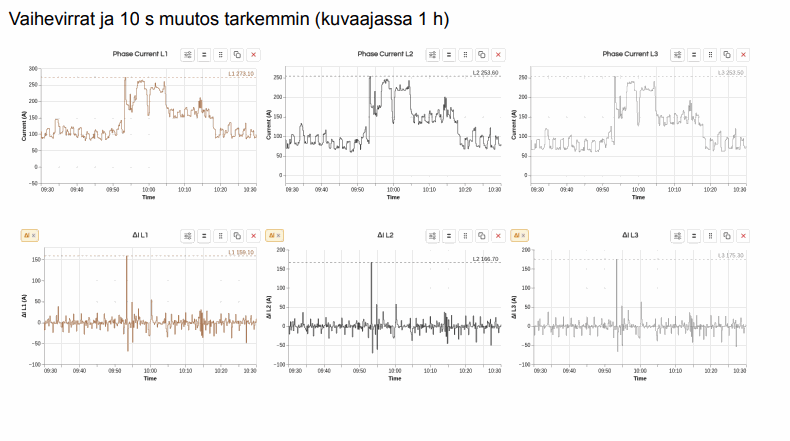
Många energihanteringssystem samlar in eldata var 15:e minut.
Även om detta tillvägagångssätt ger användbara förbrukningssammanställningar saknas det ofta upplösning som krävs för att identifiera operativa avvikelser.
Viktiga händelser kan inträffa mellan mätintervallen, inklusive:
- Utrustningens cykling
- Korta effekttoppar
- Elektriska obalanser
- Oväntade lastförändringar
- Problem med styrsystemet
När data kraftigt aggregeras kan värdefull operativ information försvinna.
Som ett resultat kan byggnadsoperatörer veta att energiförbrukningen är hög men inte förstå varför.
Vanliga källor till dolt energispill
HVAC-system
Uppvärmnings-, ventilations- och luftkonditioneringssystem är ofta ansvariga för dolda energiförluster.
Vanliga exempel inkluderar:
- Drift utanför schemalagd tid
- Samtidig uppvärmning och kylning
- Felaktiga temperaturbörvärden
- Felaktiga sensorer
- Dålig närvaroschemaläggning
Eftersom HVAC-system ofta drivs automatiskt kan ineffektiviteter fortsätta oupptäckta under långa perioder.
Nattförbrukning
Många kommersiella fastigheter förbrukar betydande mängder el även när byggnaderna till stor del är obemannade.
Detta orsakas ofta av:
- Utrustning som lämnas på
- Dåliga avstängningsrutiner
- Onödig belysning
- Konfigurationsproblem i styrsystemet
Att granska nattförbrukningsmönster kan avslöja betydande besparingsmöjligheter.
Fasobalans
Fasobalans uppstår när ellaster fördelas ojämnt över faserna.
Detta problem kan leda till:
- Ökade elektriska förluster
- Minskad utrustningseffektivitet
- Ytterligare belastning på elinfrastrukturen
- Potentiellt underhållsbehov
Traditionella övervakningssystem lyckas ofta inte tydligt lyfta fram dessa förhållanden.
Effekttoppshändelser
Kortvariga effekttoppar kan öka elkostnaderna även när den totala förbrukningen förblir stabil.
Utan detaljerad övervakning kan det vara extremt svårt att identifiera orsaken till dessa händelser.
Varningstecken på dolt energispill
Din byggnad kan ha dolt energispill om du observerar:
- Stigande elkostnader utan operativa förändringar
- Hög energianvändning nattetid eller på helger
- Betydande skillnader mellan liknande byggnader
- Frekventa effekttoppar
- Oväntat slitage på utrustning
- Energieffektiviseringsprojekt som ger lägre resultat än förväntat
Dessa indikatorer tyder ofta på underliggande ineffektiviteter.
Hur högupplöst energidata hjälper
Förmågan att identifiera dolt spill beror på synlighet.
Högupplöst energiövervakning ger betydligt mer detaljer än traditionella rapporteringssystem.
Med kortare mätintervall kan fastighetsteam:
- Upptäcka onormala driftmönster
- Undersöka effekttoppar
- Övervaka elsystemets prestanda
- Analysera utrustningsbeteende
- Verifiera operativa förbättringar
Detaljerad data hjälper till att omvandla antaganden till mätbara insikter.
Ett praktiskt exempel
Föreställ dig en kommersiell byggnad som verkar fungera normalt.
Månatliga energirapporter visar inga uppenbara problem.
Detaljerad övervakning avslöjar dock:
- HVAC-utrustning startar en timme tidigare än nödvändigt varje morgon.
- Ventilationen fortsätter att gå långt efter att verksamheten har avslutats.
- En elfas bär konsekvent en högre last än de andra.
Individuellt kan dessa problem verka mindre.
Tillsammans kan de dock skapa betydande onödiga energikostnader under hela året.
Utan detaljerad övervakning kunde dessa ineffektiviteter ha förblivit dolda på obestämd tid.
Att omvandla data till handling
Att identifiera dolt spill är bara första steget.
Framgångsrika organisationer följer en strukturerad process:
- Mät: Samla in noggrann energidata.
- Analysera: Identifiera avvikelser och ineffektiviteter.
- Prioritera: Fokusera på frågor med störst ekonomisk påverkan.
- Genomför: Justera scheman, styrsystem och driftprocedurer.
- Verifiera: Bekräfta förbättringar med uppmätta resultat.
Detta tillvägagångssätt säkerställer att besparingar är både mätbara och hållbara.
Den affärsmässiga inverkan av dolt energispill
Att minska dolt energispill kan ge flera fördelar:
- Lägre elkostnader
- Förbättrad energieffektivitet
- Bättre utrustningsprestanda
- Minskade underhållskrav
- Förbättrade hållbarhetsresultat
- Förbättrad operativ insyn
Många av de mest värdefulla energibesparingsmöjligheterna hittas inte genom stora kapitalinvesteringar utan genom bättre operativ insyn.
Slutsats
Dolt energispill finns i de flesta kommersiella byggnader.
Utmaningen är inte om ineffektiviteter finns, utan om organisationer har den synlighet som krävs för att hitta dem.
Traditionella övervakningssystem ger ofta bara en delvis bild av byggnadens prestanda.
Detaljerad energiövervakning och analys hjälper till att avslöja de operativa problem, avvikelser och ineffektiviteter som driver onödiga energikostnader.
Genom att identifiera dolt spill i tid kan organisationer förbättra effektiviteten, minska kostnaderna och fatta bättre beslut om energihantering.
Vanliga frågor
Vad är dolt energispill?
Dolt energispill är onödig elförbrukning som inte omedelbart syns genom standardrapportering eller byggnadens drift.
Vad orsakar dolt energispill?
Vanliga orsaker inkluderar HVAC-ineffektivitet, nattförbrukning, dålig schemaläggning, effekttoppar, fasobalans och problem med styrsystem.
Hur kan dolt energispill identifieras?
Den mest effektiva metoden är detaljerad energiövervakning i kombination med dataanalys och operativ granskning.
Varför är dolt energispill svårt att upptäcka?
Många ineffektiviteter orsakar inga uppenbara operativa problem och kan döljas i aggregerade energirapporter.
Kan energiövervakning minska dolt energispill?
Övervakning i sig minskar inte spillet, men den ger den synlighet som krävs för att identifiera och åtgärda ineffektiviteter.
Vilka fördelar ger det att hitta dolt energispill?
Organisationer kan sänka elkostnaderna, förbättra operativ effektivitet, minska underhållskrav och stödja hållbarhetsmål.
Redo att upptäcka dolt energispill?