
Reviewed by eWatt Team
How to Reduce Energy Costs in Commercial Buildings Without Major Investments
Commercial buildings reduce energy costs by improving how electricity is used rather than simply reducing consumption. The biggest savings often come from identifying hidden operational inefficiencies, optimising HVAC schedules, detecting unnecessary equipment runtime, and using high-resolution electricity data to uncover problems that traditional 15-minute measurements often miss.
In This Article, You'll Learn
- Why many commercial buildings waste energy without realising it.
- Why 15-minute electricity data can miss costly operational issues.
- How high-resolution electricity monitoring helps identify hidden energy waste.
- Five practical ways to reduce energy costs.
- How better electricity data supports smarter operational decisions.
Key Takeaways
- Many energy costs are caused by operational inefficiencies rather than faulty equipment.
- Traditional 15-minute measurements can hide short demand spikes and abnormal equipment behaviour.
- High-resolution electricity data helps facility teams detect hidden energy waste earlier.
- Continuous monitoring allows organisations to verify improvements instead of relying on assumptions.
- Effective energy management is about making better operational decisions, not just collecting more data.
Why Many Commercial Buildings Still Waste Energy
Electricity has become one of the largest operating expenses for commercial buildings. Rising energy prices, sustainability targets and stricter reporting requirements mean facility managers are expected to reduce costs while maintaining occupant comfort and reliable building operations.
Many organisations begin by asking: "How can we consume less electricity?"
In our experience, a more useful question is: "Where are we using electricity inefficiently?"
There is an important difference. Reducing consumption often requires investment. Reducing waste often starts by understanding how existing systems actually operate.
What We Commonly Observe in Commercial Buildings
After analysing electricity data from commercial and industrial buildings, we've noticed a consistent pattern. Most unnecessary energy costs are not caused by major equipment failures. Instead, they result from small operational inefficiencies that remain unnoticed because the building appears to function normally.
Some of the most common examples include:
- HVAC systems operating before occupants arrive or long after they leave.
- Heating and cooling systems working against each other.
- Ventilation systems running at higher airflow than necessary.
- Equipment continuing to operate during weekends or holidays.
- Several electrical loads starting simultaneously and creating unnecessary demand peaks.
- Phase imbalance reducing electrical efficiency over time.
Each issue may appear insignificant on its own. Over weeks and months, however, these small inefficiencies can have a significant impact on electricity costs.
Why Traditional Energy Monitoring Doesn't Tell the Whole Story
Most electricity meters record data every 15 minutes. While this provides a useful overview of energy consumption, it does not always explain why electricity is being used—or whether it is being used efficiently.
Many important operational events occur between measurement intervals. Examples include:
- short demand spikes
- rapid equipment cycling
- temporary overloads
- simultaneous equipment start-ups
- abnormal motor behaviour
- electrical phase imbalance
By the time these events are averaged into a 15-minute measurement, they may no longer be visible. Facility managers often see higher electricity bills without having enough information to identify the underlying cause.
What High-Resolution Electricity Data Reveals
Traditional energy monitoring provides a useful overview of electricity consumption. It tells you how much energy your building uses. What it often doesn't tell you is why.
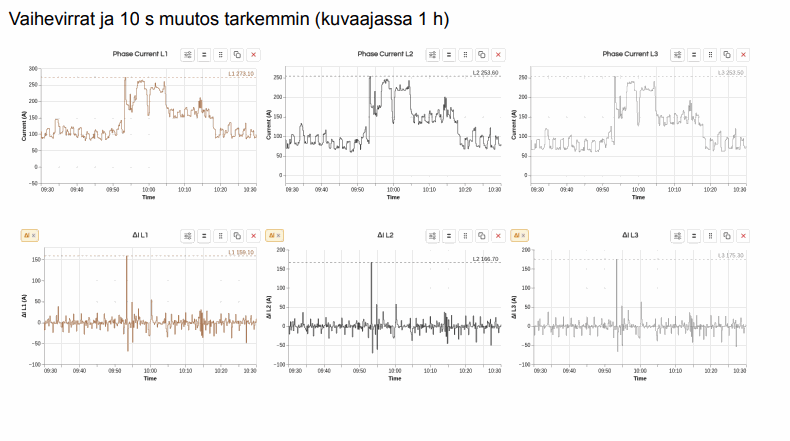
At eWatt, we've found that many of the events driving electricity costs last only a few minutes—or even seconds. By the time they're averaged into a 15-minute measurement, they've disappeared. That doesn't mean they didn't happen. It simply means they weren't captured.
By measuring electricity every 10 seconds, we can identify operational events that are often invisible in traditional monitoring. These include:
- Short demand spikes A brief increase in power demand can significantly affect electricity costs, especially in buildings where demand charges are part of the tariff. Although the event may last only a few minutes, it can influence costs for an entire billing period.
- Equipment starting simultaneously Individual systems may operate within normal limits, but when several pieces of equipment start at the same time, they can create unnecessary demand peaks. Without high-resolution data, these events are difficult to identify.
- HVAC operating outside occupancy hours One of the most common patterns we observe is HVAC equipment running before people arrive or continuing to operate after the building has become empty. Because these systems appear to work normally, unnecessary runtime often goes unnoticed.
- Electrical phase imbalance Uneven loading between electrical phases can reduce efficiency and place additional stress on electrical equipment. Traditional energy reports rarely highlight this issue, while continuous monitoring makes it much easier to detect.
Better Data Leads to Better Decisions
Collecting more electricity data isn't the objective. Making better operational decisions is.
Our own eWatt device connects directly to the building's smart meter through the HAN port and measures electricity every 10 seconds. Instead of relying on periodic reports, facility teams receive continuous visibility into how their buildings actually operate.
This makes it possible to:
- detect hidden energy waste earlier
- investigate unexpected demand peaks
- verify whether optimisation measures are working
- prioritise maintenance using real operating data
- improve operational efficiency over time
The goal isn't simply to generate more graphs. It's to provide the information needed to make confident decisions.
Why Better Visibility Matters
Reducing energy costs is about more than lowering monthly electricity bills. When organisations gain a clearer understanding of how electricity is used, they can make better decisions across operations, maintenance and long-term energy planning.
Better visibility helps facility teams to:
- identify hidden inefficiencies before they become expensive problems
- improve HVAC and building automation performance
- reduce unnecessary operating hours
- verify whether optimisation measures deliver measurable results
- support ESG reporting and energy management initiatives
- make investment decisions based on real operational data rather than assumptions
In other words, electricity data becomes a decision-making tool rather than just a reporting tool.
What We've Learned from Monitoring Commercial Buildings
Every commercial building is different. Office buildings have different operating patterns than shopping centres. Industrial facilities behave differently from healthcare buildings.
However, one observation remains remarkably consistent. Buildings rarely waste energy because a major system has failed. More often, they waste energy because small operational inefficiencies remain unnoticed for months—or even years.
A ventilation unit starts earlier than necessary. Heating and cooling overlap during seasonal transitions. Several electrical loads start at the same time, creating avoidable demand peaks.
None of these issues appear dramatic on their own. Together, however, they can significantly increase operating costs. This is why visibility matters. You cannot optimise what you cannot see.
Five Practical Ways to Reduce Energy Costs in Commercial Buildings
- Focus on operational efficiency before investing in new equipment: Replacing equipment can reduce energy consumption, but many savings opportunities already exist within existing building systems. Review how equipment operates before deciding what needs to be replaced.
- Monitor electricity continuously: Monthly utility bills and 15-minute reports provide historical information. Continuous monitoring helps identify problems while they're occurring, making it easier to investigate the underlying cause.
- Optimise HVAC schedules regularly: Building occupancy changes throughout the year. Heating, cooling and ventilation schedules should change with it. Even small adjustments can reduce unnecessary operating hours and lower electricity costs.
- Investigate every unexpected demand peak: Not every power peak is a problem. But every unexpected peak deserves attention. Understanding what caused the event helps determine whether corrective action is needed.
- Base decisions on data, not assumptions: Energy management becomes much more effective when operational decisions are supported by reliable measurements instead of estimates. The better your visibility into building performance, the easier it becomes to identify where improvements will have the greatest impact.
From Monitoring to Operational Decisions
Many organisations already collect electricity data. The challenge is rarely a lack of information. The challenge is understanding which events deserve attention and which actions will have the greatest impact.
At eWatt, we believe energy monitoring should do more than display charts. It should help facility teams answer practical questions, such as: Why did electricity consumption increase yesterday? Which system created the demand peak? Is the HVAC schedule still aligned with building occupancy? Did the optimisation we implemented last month actually reduce electricity use? Which issue should be investigated first?
When electricity data answers these questions, it becomes a valuable operational tool—not simply another dashboard.
Conclusion
Reducing energy costs is not about consuming less electricity at any cost. It is about using electricity more intelligently.
Most commercial buildings already contain opportunities for savings. The challenge is identifying where those opportunities exist and acting on them before unnecessary costs accumulate.
High-resolution electricity monitoring provides the visibility needed to detect hidden inefficiencies, understand building behaviour and support better operational decisions.
As energy prices continue to evolve and buildings become increasingly complex, organisations that understand how electricity is actually used will be better positioned to reduce costs, improve efficiency and operate more sustainably.
Frequently Asked Questions
How can commercial buildings reduce energy costs?
Commercial buildings reduce energy costs by improving operational efficiency, optimising HVAC schedules, identifying hidden energy waste and using detailed electricity data to support maintenance and energy management decisions.
What causes hidden energy waste in commercial buildings?
Hidden energy waste is commonly caused by equipment operating outside occupancy hours, simultaneous heating and cooling, unnecessary ventilation, demand spikes and other operational inefficiencies that often remain unnoticed in traditional energy reports.
Why isn't 15-minute electricity data always sufficient?
Many important operational events occur between 15-minute measurement intervals. Short demand spikes, equipment cycling and electrical phase imbalance can disappear once electricity data is averaged, making the underlying cause of increased energy costs difficult to identify.
What is high-resolution electricity monitoring?
High-resolution electricity monitoring captures electrical measurements at much shorter intervals than traditional monitoring systems. This provides greater visibility into building operations and helps identify inefficiencies that would otherwise remain hidden.
Can energy monitoring reduce electricity costs?
Energy monitoring alone does not reduce electricity costs. However, it provides the information needed to identify inefficiencies, prioritise corrective actions and verify that optimisation measures are delivering measurable improvements.
Ready to uncover hidden energy waste in your property?