
Tarkistanut eWatt-tiimi
Kuinka vähentää liikekiinteistöjen energiakustannuksia ilman suuria investointeja
Liikekiinteistöt vähentävät energiakustannuksia parantamalla sähkön käyttöä sen sijaan, että pelkästään vähentäisivät kulutusta. Suurimmat säästöt syntyvät usein piilevien toiminnallisten tehottomuuksien tunnistamisesta, LVI-aikataulujen optimoinnista, tarpeettoman käyntiajan havaitsemisesta ja korkearesoluutioisen sähködatan hyödyntämisestä ongelmien paljastamiseen, jotka perinteinen 15 minuutin mittaus jättää usein huomaamatta.
Tässä artikkelissa opit
- Miksi monet liikekiinteistöt tuhlaavat energiaa sitä huomaamatta.
- Miksi 15 minuutin sähködata voi ohittaa kalliita toiminnallisia ongelmia.
- Miten korkearesoluutioinen sähköseuranta auttaa tunnistamaan piilevän energihaaskun.
- Viisi käytännön tapaa vähentää energiakustannuksia.
- Miten parempi sähködata tukee älykkäämpiä operatiivisia päätöksiä.
Keskeiset havainnot
- Monet energiakustannukset johtuvat toiminnallisista tehottomuuksista pikemminkin kuin viallisista laitteista.
- Perinteiset 15 minuutin mittaukset voivat piilottaa lyhyet tehopiikit ja poikkeavan laitekäyttäytymisen.
- Korkearesoluutioinen sähködata auttaa kiinteistötiimejä havaitsemaan piilevän energihaaskun aiemmin.
- Jatkuva seuranta antaa organisaatioille mahdollisuuden todentaa parannukset oletusten sijaan.
- Tehokas energianhallinta on parempien operatiivisten päätösten tekemistä, ei vain lisää datan keräämistä.
Miksi monet liikekiinteistöt tuhlaavat edelleen energiaa
Sähköstä on tullut yksi liikekiinteistöjen suurimmista käyttökuluista. Nousevat energiahinnat, kestävyystavoitteet ja tiukemmat raportointivaatimukset tarkoittavat, että kiinteistöpäälliköiden odotetaan vähentävän kustannuksia samalla kun käyttäjämukavuus ja luotettava rakennuksen toiminta säilyvät.
Monet organisaatiot aloittavat kysymällä: "Miten voimme kuluttaa vähemmän sähköä?"
Kokemuksemme mukaan hyödyllisempi kysymys on: "Missä käytämme sähköä tehottomasti?"
Ero on merkittävä. Kulutuksen vähentäminen vaatii usein investointeja. Haaskun vähentäminen alkaa usein ymmärtämällä, miten olemassa olevat järjestelmät todellisuudessa toimivat.
Mitä havaitsemme yleisesti liikekiinteistöissä
Kun olemme analysoineet liike- ja teollisuuskiinteistöjen sähködataa, olemme huomanneet johdonmukaisen kaavan. Useimmat tarpeettomat energiakustannukset eivät johdu suurista laiterikoista, vaan pienistä toiminnallisista tehottomuuksista, jotka jäävät huomaamatta, koska rakennus näyttää toimivan normaalisti.
Yleisimpiä esimerkkejä ovat:
- LVI-järjestelmät käynnistyvät ennen käyttäjien saapumista tai jäävät päälle pitkään heidän lähdettyään.
- Lämmitys- ja jäähdytysjärjestelmät toimivat toisiaan vastaan.
- Ilmanvaihtojärjestelmät käyvät tarpeettoman suurella ilmavirralla.
- Laitteet jäävät toimimaan viikonloppuisin tai pyhäpäivinä.
- Useat sähkökuormat käynnistyvät samanaikaisesti aiheuttaen tarpeettomia tehopiikkejä.
- Vaihe-epätasapaino heikentää sähkötehokkuutta ajan myötä.
Jokainen ongelma voi vaikuttaa yksin vähäiseltä. Viikkojen ja kuukausien aikana nämä pienet tehottomuudet voivat kuitenkin vaikuttaa merkittävästi sähkökustannuksiin.
Miksi perinteinen energiaseuranta ei kerro koko tarinaa
Useimmat sähkömittarit tallentavat dataa 15 minuutin välein. Vaikka tämä antaa hyödyllisen yleiskuvan energiankulutuksesta, se ei aina kerro, miksi sähköä käytetään – tai käytetäänkö sitä tehokkaasti.
Monet tärkeät operatiiviset tapahtumat sattuvat mittausvälien välissä. Esimerkkejä ovat:
- lyhyet tehopiikit
- laitteiden nopea syklikäyttö
- hetkelliset ylikuormitukset
- laitteiden samanaikaiset käynnistykset
- poikkeava moottorien käyttäytyminen
- sähköinen vaihe-epätasapaino
Kun nämä tapahtumat keskiarvoistuvat 15 minuutin mittaukseen, ne eivät välttämättä enää näy. Kiinteistöpäälliköt näkevät usein korkeampia sähkölaskuja ilman riittävää tietoa perimmäisen syyn tunnistamiseksi.
Mitä korkearesoluutioinen sähködata paljastaa
Perinteinen energiaseuranta antaa hyödyllisen yleiskuvan sähkönkulutuksesta. Se kertoo, kuinka paljon energiaa rakennuksesi käyttää. Se ei kuitenkaan usein kerro miksi.
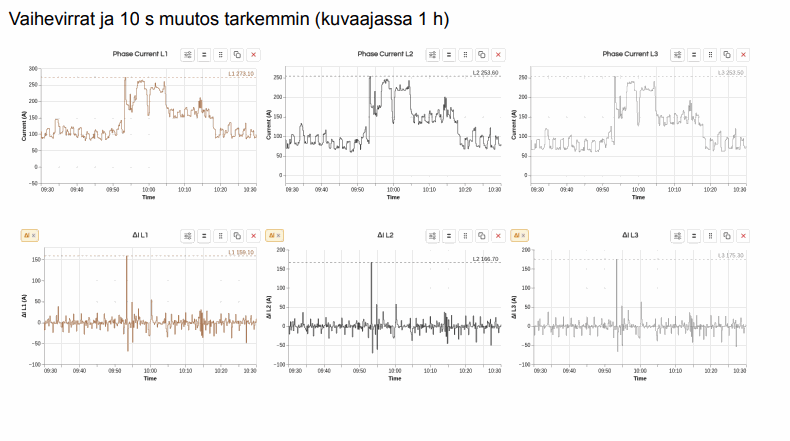
eWattilla olemme havainneet, että monet sähkökustannuksia ajavat tapahtumat kestävät vain muutaman minuutin – tai jopa sekuntia. Kun ne keskiarvoistuvat 15 minuutin mittaukseen, ne katoavat. Se ei tarkoita, ettei niitä olisi tapahtunut. Se tarkoittaa vain, ettei niitä tallennettu.
Mittaamalla sähköä 10 sekunnin välein voimme tunnistaa toiminnallisia tapahtumia, jotka ovat usein näkymättömiä perinteisessä seurannassa. Näitä ovat:
- Lyhyet tehopiikit Lyhyt tehonoususta voi vaikuttaa merkittävästi sähkökustannuksiin erityisesti rakennuksissa, joissa tehomaksut ovat osa tariffia. Vaikka tapahtuma voi kestää vain muutaman minuutin, se voi vaikuttaa koko laskutuskauden kustannuksiin.
- Laitteiden samanaikainen käynnistyminen Yksittäiset järjestelmät voivat toimia normaaleissa rajoissa, mutta kun useita laitteita käynnistyy samanaikaisesti, ne voivat luoda tarpeettomia tehopiikkejä. Ilman korkearesoluutioista dataa nämä tapahtumat on vaikea tunnistaa.
- LVI käyntiaikojen ulkopuolella Yksi yleisimmistä havaitsemistamme kaavoista on LVI-laitteet, jotka käynnistyvät ennen ihmisten saapumista tai jatkavat toimintaansa rakennuksen tyhjennyttyä. Koska nämä järjestelmät näyttävät toimivan normaalisti, tarpeeton käyntiaika jää usein huomaamatta.
- Sähköinen vaihe-epätasapaino Epätasainen kuormitus sähkövaiheiden välillä voi heikentää tehokkuutta ja rasittaa sähkölaitteita. Perinteiset energiaraportit tuovat tämän harvoin esiin, kun taas jatkuva seuranta helpottaa sen havaitsemista.
Parempi data johtaa parempiin päätöksiin
Tavoitteena ei ole kerätä lisää sähködataa. Tavoitteena on tehdä parempia operatiivisia päätöksiä.
Oma eWatt-laitteemme kytkeytyy suoraan rakennuksen älymittariin HAN-portin kautta ja mittaa sähköä 10 sekunnin välein. Kausittaisten raporttien sijaan kiinteistötiimit saavat jatkuvaa näkyvyyttä siihen, miten rakennukset todella toimivat.
Tämä mahdollistaa:
- piilevän energihaaskun havaitsemisen aiemmin
- odottamattomien tehopiikkien tutkimisen
- optimointitoimenpiteiden vaikutusten todentamisen
- kunnossapidon priorisoinnin todellisen käyttödatan perusteella
- toiminnan tehokkuuden parantamisen ajan myötä
Tavoite ei ole tuottaa lisää kaavioita. Tavoite on tarjota tietoa, jonka avulla voidaan tehdä varmoja päätöksiä.
Miksi parempi näkyvyys on tärkeää
Energiakustannusten vähentäminen on muutakin kuin kuukausittaisten sähkölaskujen pienentämistä. Kun organisaatiot ymmärtävät selkeämmin, miten sähköä käytetään, ne voivat tehdä parempia päätöksiä toimintojen, kunnossapidon ja pitkän aikavälin energiasuunnittelun osalta.
Parempi näkyvyys auttaa kiinteistötiimejä:
- tunnistamaan piileviä tehottomuuksia ennen kuin niistä tulee kalliita ongelmia
- parantamaan LVI:n ja rakennusautomaation suorituskykyä
- vähentämään tarpeettomia käyttötunteja
- todentamaan, tuottavatko optimointitoimenpiteet mitattavia tuloksia
- tukemaan ESG-raportointia ja energianhallinnan aloitteita
- tekemään investointipäätöksiä todellisen käyttödatan pohjalta oletusten sijaan
Toisin sanoen sähködatasta tulee päätöksenteon työkalu, ei vain raportointityökalu.
Mitä olemme oppineet liikekiinteistöjen seurannasta
Jokainen liikekiinteistö on erilainen. Toimistorakennuksilla on erilaiset käyttökaavat kuin kauppakeskuksilla. Teolliset kohteet käyttäytyvät eri tavoin kuin terveydenhuollon rakennukset.
Yksi havainto pysyy kuitenkin huomattavan johdonmukaisena. Rakennukset harvoin tuhlaavat energiaa siksi, että suuri järjestelmä on hajonnut. Useammin ne tuhlaavat energiaa, koska pienet toiminnalliset tehottomuudet jäävät huomaamatta kuukausiksi – tai jopa vuosiksi.
Ilmanvaihtokone käynnistyy tarpeettoman aikaisin. Lämmitys ja jäähdytys menevät päällekkäin vuodenaikojen vaihteluissa. Useat sähkökuormat käynnistyvät samanaikaisesti aiheuttaen vältettävissä olevia tehopiikkejä.
Yksikään näistä ei vaikuta dramaattiselta yksinään. Yhdessä ne voivat kuitenkin nostaa käyttökustannuksia merkittävästi. Tämän vuoksi näkyvyys on tärkeää. Et voi optimoida sitä, mitä et näe.
Viisi käytännön tapaa vähentää liikekiinteistöjen energiakustannuksia
- Keskity toiminnan tehokkuuteen ennen uusiin laitteisiin investointia: Laitteiden vaihtaminen voi vähentää energiankulutusta, mutta monia säästömahdollisuuksia on jo olemassa nykyisissä järjestelmissä. Tarkista, miten laitteet toimivat, ennen kuin päätät, mitä on vaihdettava.
- Valvo sähköä jatkuvasti: Kuukausittaiset sähkölaskut ja 15 minuutin raportit tarjoavat historiatietoa. Jatkuva seuranta auttaa tunnistamaan ongelmia niiden tapahtuessa, mikä helpottaa perimmäisen syyn selvittämistä.
- Optimoi LVI-aikataulut säännöllisesti: Rakennuksen käyttöasteet muuttuvat ympäri vuoden. Lämmityksen, jäähdytyksen ja ilmanvaihdon aikataulujen tulisi muuttua sen mukana. Pienetkin säädöt voivat vähentää tarpeettomia käyttötunteja ja alentaa sähkökustannuksia.
- Tutki jokainen odottamaton tehopiikki: Kaikki tehopiikit eivät ole ongelmia. Mutta jokainen odottamaton piikki ansaitsee huomion. Tapahtuman syyn ymmärtäminen auttaa määrittämään, tarvitaanko korjaavia toimenpiteitä.
- Perusta päätökset dataan, älä oletuksiin: Energianhallinnasta tulee paljon tehokkaampaa, kun operatiiviset päätökset perustuvat luotettaviin mittauksiin arvioiden sijaan. Mitä parempi näkyvyys sinulla on rakennuksen suorituskykyyn, sitä helpompaa on tunnistaa, missä parannuksilla on suurin vaikutus.
Seurannasta operatiivisiin päätöksiin
Monet organisaatiot keräävät jo sähködataa. Haaste on harvoin tiedon puute. Haaste on ymmärtää, mitkä tapahtumat ansaitsevat huomiota ja millä toimenpiteillä on suurin vaikutus.
eWattilla uskomme, että energiaseurannan tulisi tehdä muutakin kuin näyttää kaavioita. Sen tulisi auttaa kiinteistötiimejä vastaamaan käytännön kysymyksiin, kuten: Miksi sähkönkulutus nousi eilen? Mikä järjestelmä loi tehopiikin? Onko LVI-aikataulu edelleen linjassa rakennuksen käytön kanssa? Vähensikö viime kuussa toteuttamamme optimointi todella sähkönkulutusta? Mikä ongelma tulisi tutkia ensin?
Kun sähködata vastaa näihin kysymyksiin, siitä tulee arvokas operatiivinen työkalu – ei vain toinen kojelauta.
Johtopäätös
Energiakustannusten vähentäminen ei tarkoita sähkön kuluttamista vähemmän hinnalla millä hyvänsä. Se tarkoittaa sähkön käyttämistä älykkäämmin.
Useimmissa liikekiinteistöissä on jo säästömahdollisuuksia. Haasteena on tunnistaa, missä ne ovat, ja toimia ennen kuin tarpeettomat kustannukset kertyvät.
Korkearesoluutioinen sähköseuranta tarjoaa näkyvyyden, jota tarvitaan piilevien tehottomuuksien havaitsemiseen, rakennuksen käyttäytymisen ymmärtämiseen ja parempien operatiivisten päätösten tukemiseen.
Kun energiahinnat jatkavat muutostaan ja rakennukset monimutkaistuvat, organisaatiot, jotka ymmärtävät sähkön todellisen käytön, ovat paremmassa asemassa vähentämään kustannuksia, parantamaan tehokkuutta ja toimimaan kestävämmin.
Usein kysytyt kysymykset
Kuinka liikekiinteistöt voivat vähentää energiakustannuksia?
Liikekiinteistöt vähentävät energiakustannuksia parantamalla toiminnan tehokkuutta, optimoimalla LVI-aikatauluja, tunnistamalla piilevän energihaaskun ja käyttämällä yksityiskohtaista sähködataa kunnossapidon ja energianhallinnan päätösten tueksi.
Mikä aiheuttaa piilevää energihaaskua liikekiinteistöissä?
Piilevä energihaasku johtuu yleisesti siitä, että laitteet käyvät käyttöaikojen ulkopuolella, lämmitys ja jäähdytys toimivat samanaikaisesti, ilmanvaihto on tarpeeton, tehopiikkejä esiintyy ja muut toiminnalliset tehottomuudet jäävät huomaamatta perinteisissä energiaraporteissa.
Miksi 15 minuutin sähködata ei aina riitä?
Monet tärkeät operatiiviset tapahtumat sattuvat 15 minuutin mittausvälien välissä. Lyhyet tehopiikit, laitteiden syklikäyttö ja sähkövaiheiden epätasapaino voivat kadota, kun sähködata keskiarvoistuu, mikä vaikeuttaa energiakustannusten nousun perussyyn tunnistamista.
Mitä on korkearesoluutioinen sähköseuranta?
Korkearesoluutioinen sähköseuranta tallentaa sähkömittaukset paljon lyhyemmin väliajoin kuin perinteiset järjestelmät. Tämä tarjoaa paremman näkyvyyden rakennuksen toimintaan ja auttaa tunnistamaan tehottomuuksia, jotka muuten jäisivät piiloon.
Voiko energiaseuranta alentaa sähkökustannuksia?
Pelkkä energiaseuranta ei alenna sähkökustannuksia. Se tarjoaa kuitenkin tiedon, jota tarvitaan tehottomuuksien tunnistamiseen, korjaavien toimenpiteiden priorisointiin ja optimointien mitattavien parannusten todentamiseen.
Valmis paljastamaan piilevän energihaaskun kiinteistössäsi?