
Tarkistanut eWatt-tiimi
Huipputehomaksut selitettynä: piilokustannus sähkölaskussasi
Monet liikekiinteistöjen omistajat keskittyvät pääasiassa sähkön kokonaiskulutukseen tarkastellessaan energiakustannuksia.
Yksi eniten huomiotta jäävistä korkeiden sähkölaskujen aiheuttajista on kuitenkin huipputeho.
Monissa liikekiinteistöjen sähkösopimuksissa yksittäinen lyhytkestoinen tehopiikki voi nostaa kuukausittaisia energiakustannuksia merkittävästi.
Huipputehomaksujen ymmärtäminen on olennaista kiinteistöpäälliköille, kiinteistönomistajille ja energia-ammattilaisille, jotka haluavat alentaa käyttökustannuksia ja parantaa energiatehokkuutta.
Mitä ovat huipputehomaksut?
Huipputehomaksut ovat maksuja, jotka perustuvat laskutusjakson aikana mitattuun korkeimpaan sähköntehotarpeeseen.
Toisin kuin energiakulutusmaksut, jotka perustuvat käytettyihin kilowattitunteihin (kWh), tehomaksut perustuvat tehotarpeeseen, joka mitataan tyypillisesti kilowatteina (kW).
Yksinkertaisesti sanottuna:
- Energiankulutus mittaa, kuinka paljon sähköä käytät.
- Tehotarve mittaa, kuinka paljon sähköä käytät tiettynä hetkenä.
Lyhyt tehopiikki voi vaikuttaa sähkölaskuusi, vaikka kokonaiskulutus pysyisi suhteellisen matalana.
Miksi verkkoyhtiöt veloittavat huipputehosta?
Sähköntoimittajien on ylläpidettävä infrastruktuuria, joka pystyy tukemaan verkkoon kohdistuvia korkeimpia tehotarpeita.
Kun rakennus aiheuttaa suuria tehopiikkejä, verkkoyhtiön on varmistettava riittävä tuotanto-, siirto- ja jakelukapasiteetti.
Tehomaksut auttavat kattamaan nämä infrastruktuurikustannukset.
Siksi huipputehon vähentäminen voi usein tuottaa merkittäviä säästöjä ilman, että rakennuksen toimintaa täytyy vähentää.
Mikä aiheuttaa tehopiikkejä?
Monissa liikekiinteistöissä esiintyy tehopiikkejä huomaamatta.
Yleisiä syitä ovat:
Laitteiden samanaikainen käynnistyminen
Useiden järjestelmien samanaikainen käynnistyminen voi aiheuttaa äkillisiä sähkön tehotarpeen nousuja.
Esimerkkejä:
- LVI-laitteet
- Jäähdyttimet
- Kompressorit
- Pumput
- Hissit
Puutteellinen laitteiden aikataulutus
Järjestelmien samanaikainen toiminta käyttöajan muutoskohdissa voi aiheuttaa tarpeettomia piikkejä.
Kiinteistöautomaation ongelmat
Säätöjärjestelmän virheet voivat aiheuttaa laitteiden tehotonta käynnistymistä tai pysähtymistä.
Odottamattomat toiminnalliset tapahtumat
Tilapäiset prosessimuutokset, huoltotyöt tai laitevikojen seuraukset voivat aiheuttaa poikkeuksellisen korkeita tehotarpeen jaksoja.
Miksi huipputehoa on vaikea havaita
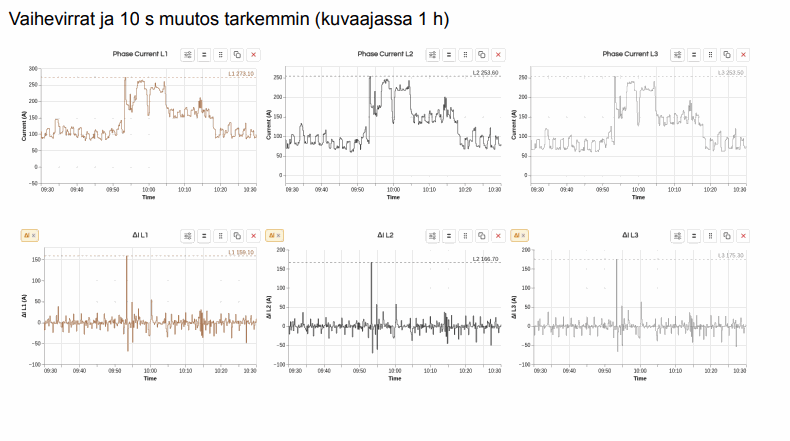
Monet perinteiset energianseurantajärjestelmät keräävät dataa 15 minuutin välein.
Tämä riittää usein kokonaiskulutuksen raportointiin, mutta ei välttämättä anna kokonaiskuvaa tehotarpeen käyttäytymisestä.
Lyhytkestoiset piikit voivat syntyä ja kadota mittausjaksojen välissä.
Tämän seurauksena:
- Tehopiikit saatetaan aliarvioida
- Perimmäiset syyt jäävät tunnistamatta
- Säästömahdollisuudet menetetään
Tämä on haaste organisaatioille, jotka pyrkivät hallitsemaan sähkökustannuksia tehokkaasti.
Korkearesoluutioisen energiadatan arvo
Yksityiskohtainen sähkönseuranta tarjoaa paremman näkyvyyden tehotarpeen kuvioihin.
Kun energiadataa kerätään lyhyemmin välein, kiinteistötiimit voivat:
- Tunnistaa tehopiikkien tarkan ajankohdan
- Selvittää, mitkä järjestelmät vaikuttivat piikkiin
- Analysoida laitteiden välistä vuorovaikutusta
- Vahvistaa korjaavien toimenpiteiden vaikutuksen
Tällainen näkyvyys auttaa organisaatioita siirtymään raportoinnista aktiiviseen energianhallintaan.
Miten tehomaksut vaikuttavat liikekiinteistöihin
Tehomaksut voivat muodostaa merkittävän osan kuukausittaisista sähkökustannuksista.
Rakennuksissa, joissa kuormat vaihtelevat voimakkaasti, tehoon liittyvät kustannukset voivat kasvaa, vaikka kokonaiskulutus pysyisi suhteellisen vakaana.
Tämä tarkoittaa:
- Pienempi kulutus ei aina takaa pienempiä laskuja
- Toiminnan käyttäytymisestä tulee yhä tärkeämpää
- Piikkien hallinta voi tuoda merkittäviä taloudellisia hyötyjä
Monet organisaatiot huomaavat, että muutaman tehopiikin vähentäminen voi tuoda suurempia säästöjä kuin laajat kulutuksen vähentämishankkeet.
Strategiat huipputehon vähentämiseen
- Porrasta laitteiden käynnistysajat: Vältä useiden suurten sähkökuormien samanaikaista käynnistämistä.
- Paranna laitteiden aikataulutusta: Tarkista rakennuksen aikataulut ja varmista, että järjestelmät toimivat vain tarvittaessa.
- Seuraa tehotarvetta jatkuvasti: Yksityiskohtainen seuranta auttaa tunnistamaan kuviot, jotka aiheuttavat tehopiikkejä.
- Tutki toiminnalliset poikkeamat: Odottamattomat piikit viittaavat usein optimointimahdollisuuksiin.
- Vahvista parannukset datalla: Mittaa suorituskykyä ennen ja jälkeen muutosten varmistaaksesi säästöt.
Huipputeho vs. energiankulutus
Vaikka mittarit liittyvät läheisesti toisiinsa, ne mittaavat sähkönkäytön eri puolia.
| Energiankulutus | Huipputeho |
|---|---|
| Mitataan kilowattitunteina (kWh) | Mitataan kilowatteina (kW) |
| Käytetty sähkön kokonaismäärä | Suurin sähkönkäyttö tiettynä hetkenä |
| Vaikuttaa energiamaksuihin | Vaikuttaa tehomaksuihin |
| Heijastaa kulutuksen määrää | Heijastaa kulutuksen intensiteettiä |
Molemmat mittarit ovat tärkeitä energian kokonaiskustannusten ymmärtämisessä.
Miksi tehotarpeen näkyvyys on tärkeää
Organisaatiot keskittyvät usein kokonaisenergian vähentämiseen jättäen tehotarpeeseen liittyvät kustannukset huomiotta.
Ilman yksityiskohtaista näkyvyyttä on vaikea vastata kysymyksiin kuten:
- Mikä aiheutti tämän päivän piikin?
- Mitkä laitteet vaikuttivat eniten?
- Milloin tehopiikkejä esiintyy?
- Miten tulevia piikkejä voidaan välttää?
Vastaukset ovat usein piilossa datassa.
Yhteenveto
Huipputehomaksut ovat yksi liikekiinteistöjen sähkölaskujen väärinymmärretyimmistä osista.
Vaikka energiankulutus on edelleen tärkeää, tehotarpeeseen liittyvät kustannukset voivat vaikuttaa merkittävästi käyttökustannuksiin.
Sen ymmärtäminen, milloin tehopiikkejä syntyy, mikä niitä aiheuttaa ja miten niitä voidaan vähentää, on tehokkaan energianhallinnan keskeinen osa.
Yksityiskohtaisen energianseurannan ja -analytiikan avulla organisaatiot voivat tunnistaa mahdollisuuksia vähentää tehomaksuja, alentaa sähkökustannuksia ja parantaa toiminnan tehokkuutta.
Usein kysytyt kysymykset
Mitä ovat huipputehomaksut?
Huipputehomaksut ovat sähkömaksuja, jotka perustuvat laskutusjakson aikana mitattuun korkeimpaan tehotarpeeseen.
Miten tehomaksut eroavat energiamaksuista?
Energiamaksut perustuvat sähkön kokonaiskulutukseen (kWh), kun taas tehomaksut perustuvat korkeimpaan tehotarpeeseen (kW).
Voiko huipputehon vähentäminen alentaa sähkökustannuksia?
Kyllä. Monissa liikekiinteistöjen sähkösopimuksissa huipputehon vähentäminen voi alentaa kuukausittaisia energiakustannuksia merkittävästi.
Mikä aiheuttaa tehopiikkejä?
Tehopiikit johtuvat usein useiden järjestelmien samanaikaisesta toiminnasta, laitteiden käynnistymisestä, säätöjärjestelmien ongelmista tai toiminnallisista poikkeamista.
Miksi tehopiikkejä on vaikea tunnistaa?
Perinteiset seurantajärjestelmät käyttävät usein pidempiä mittausvälejä, mikä vaikeuttaa lyhytkestoisten tehotapahtumien tutkimista.
Miten energianseuranta auttaa vähentämään tehomaksuja?
Yksityiskohtainen seuranta auttaa tunnistamaan, milloin piikit syntyvät, mitkä järjestelmät vaikuttivat niihin ja millä toimenpiteillä tulevia tehotapahtumia voidaan vähentää.
Valmis tunnistamaan kalliit tehopiikit?

