
Tarkistanut eWatt-tiimi
Kuinka paljon energiaa hukataan liikekiinteistöissä?
Energiakustannukset ovat yksi liikekiinteistöjen suurimmista käyttökuluista. Monet kiinteistönomistajat ja kiinteistöpäälliköt yllättyvät kuitenkin huomatessaan, että merkittävä osa sähkönkulutuksesta ei välttämättä tuota lisäarvoa rakennuksen toiminnalle.
Haasteena on, että energiahävikki on usein näkymätöntä.
Ilman yksityiskohtaista energianseurantaa ja analytiikkaa rakennukset voivat kuluttaa ylimääräistä sähköä kuukausien, tai jopa vuosien, ajan ilman, että kukaan huomaa sitä.
Tässä artikkelissa tarkastelemme, missä energiahävikkiä syntyy liikekiinteistöissä, miksi sitä syntyy ja miten moderni energianseuranta auttaa tunnistamaan piileviä tehottomuuksia.
Mitä on energiahävikki?
Energiahävikkiä syntyy, kun sähköä kulutetaan ilman, että se tuottaa arvoa rakennukselle tai sen käyttäjille.
Esimerkkejä:
- Laitteet käyvät tarpeettomasti
- LVI-järjestelmät toimivat toiminta-aikojen ulkopuolella
- Samanaikainen lämmitys ja jäähdytys
- Valaistus käyttämättömissä tiloissa
- Liiallinen huipputeho
- Vaihe-epätasapaino
- Tehoton laitteiden aikataulutus
Toisin kuin välttämätön energiankulutus, hukattu energia nostaa käyttökustannuksia parantamatta viihtyvyyttä, tuottavuutta tai suorituskykyä.
Missä energiaa yleensä hukataan liikekiinteistöissä?
LVI-järjestelmät
Lämmitys-, ilmanvaihto- ja jäähdytysjärjestelmät ovat tyypillisesti liikekiinteistöjen suurimpia sähkönkuluttajia.
Yleisiä hävikin lähteitä ovat:
- Virheelliset aikataulut
- Laitteet käyvät öisin tai viikonloppuisin
- Puutteelliset säätöasetukset
- Samanaikainen lämmitys ja jäähdytys
- Vialliset anturit
Pienetkin tehottomuudet voivat aiheuttaa merkittäviä vuotuisia energiakustannuksia.
Valaistus
Valaistusjärjestelmät kuluttavat usein sähköä, kun tilat ovat tyhjillään.
Yleisiä ongelmia ovat:
- Valot jäävät päälle työajan jälkeen
- Huonosti konfiguroidut automaatiojärjestelmät
- Ylivalaistut tilat
Vaikka valaistustekniikka on kehittynyt energiatehokkaammaksi, toimintatavat aiheuttavat edelleen tarpeetonta kulutusta.
Laitteet ja pistorasiakuormat
Toimistolaitteet, palvelimet, keittiölaitteet ja muut sähkölaitteet kuluttavat usein virtaa toiminta-ajan ulkopuolella.
Monet kiinteistöt huomaavat, että yllättävän suuri osa niiden sähkönkulutuksesta tapahtuu silloin, kun rakennukset ovat lähes tyhjiä.
Huipputehomaksut
Monissa sähkösopimuksissa kustannuksiin vaikuttaa kokonaiskulutuksen lisäksi myös huipputeho.
Lyhytkestoiset tehopiikit voivat nostaa sähkölaskuja merkittävästi.
Ilman yksityiskohtaista seurantaa nämä tapahtumat jäävät usein huomaamatta.
Sähkönjakelun ongelmat
Modernit seurantajärjestelmät voivat paljastaa ongelmia, jotka perinteinen raportointi voi jättää huomaamatta, kuten:
- Vaihe-epätasapaino
- Jännitepoikkeamat
- Poikkeava kuormakäyttäytyminen
- Odottamaton laitteiden käynnistyminen
Nämä ongelmat voivat nostaa energiakustannusten lisäksi myös vaikuttaa laitteiden suorituskykyyn ja luotettavuuteen.
Miksi energiahävikki jää usein huomaamatta
Monet rakennukset luottavat edelleen perinteisiin energianseurantajärjestelmiin, jotka keräävät dataa 15 minuutin välein.
Vaikka tämä riittää perusraportointiin, kyseinen tarkkuus voi jättää huomaamatta:
- Lyhytkestoiset poikkeamat
- Laitteiden käynnistystapahtumat
- Lyhyet tehopiikit
- Sähköiset epätasapainot
- Toiminnalliset tehottomuudet
Kun data tiivistetään 15 minuutin intervalleihin, tärkeää tietoa voi kadota.
Tämä luo katvealueita, jotka tekevät energiahävikin tunnistamisesta huomattavasti vaikeampaa.
Korkearesoluutioisen energiadatan rooli
Modernit energia-analytiikka-alustat tarjoavat huomattavasti enemmän näkyvyyttä rakennuksen toimintaan.
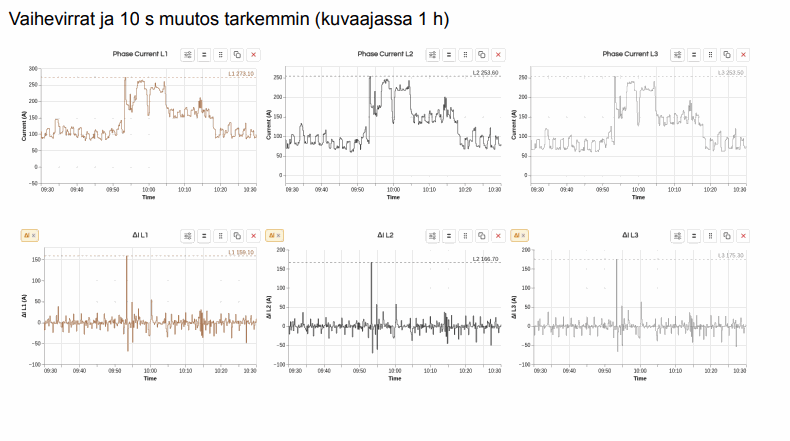
Esimerkiksi 10 sekunnin välein kerättävä sähködata mahdollistaa kiinteistötiimeille:
- Poikkeavien kulutuskuvioiden havaitsemisen
- Piilevän energiahävikin tunnistamisen
- Tehopiikkien tutkimisen
- Sähköjärjestelmän suorituskyvyn seurannan
- Energiansäästötoimenpiteiden vaikutuksen todentamisen
Mitä yksityiskohtaisempaa dataa on käytettävissä, sitä helpompi on ymmärtää, mitä rakennuksessa tapahtuu.
Merkkejä siitä, että rakennuksesi saattaa hukata energiaa
Liikekiinteistöjen kannattaa tutkia asiaa tarkemmin, jos ne havaitsevat:
- Korkeita energiakustannuksia ilman selvää syytä
- Merkittävää yökulutusta
- Toistuvia tehopiikkejä
- Nousevia sähkökustannuksia tehokkuushankkeista huolimatta
- Selittämättömiä laiteongelmia
- Suuria eroja samankaltaisten rakennusten välillä
Nämä merkit viittaavat usein piileviin toiminnallisiin tehottomuuksiin.
Kuinka vähentää energiahävikkiä
Ensimmäinen askel on näkyvyys.
Energiahävikkiä menestyksekkäästi vähentävät organisaatiot noudattavat tyypillisesti seuraavaa prosessia:
- Mittaa: Mittaa energiankulutus tarkasti.
- Tunnista: Tunnista poikkeamat ja tehottomuudet.
- Priorisoi: Priorisoi mahdollisuudet taloudellisen vaikutuksen perusteella.
- Toteuta: Toteuta korjaavat toimenpiteet.
- Vahvista: Vahvista säästöt todellisilla mittaustiedoilla.
Ilman luotettavaa dataa energianhallinta jää pitkälti arvailun varaan.
Miksi energia-analytiikka on tärkeää
Energia-analytiikka muuttaa raakasähködatan toimintakelpoisiksi oivalluksiksi.
Sen sijaan, että analytiikka näyttäisi vain kulutuksen, se auttaa vastaamaan tärkeisiin kysymyksiin:
- Miksi kulutus kasvoi?
- Mitkä järjestelmät ovat vastuussa?
- Milloin ongelma alkoi?
- Mitkä toimenpiteet vähentävät kustannuksia?
Tämä mahdollistaa siirtymisen reaktiivisesta hallinnasta ennakoivaan optimointiin.
Yhteenveto
Useimmilla liikekiinteistöillä on mahdollisuuksia parantaa energiatehokkuutta ja vähentää tarpeetonta sähkönkulutusta.
Haaste ei ole se, onko energiahävikkiä, vaan se, onko organisaatioilla tarvittavaa näkyvyyttä sen löytämiseen.
Yksityiskohtainen energianseuranta ja -analytiikka auttavat paljastamaan tehottomuuksia, jotka perinteiset raportointimenetelmät usein jättävät huomaamatta, antaen kiinteistötiimeille mahdollisuuden tehdä parempia päätöksiä, alentaa kustannuksia ja parantaa rakennuksen suorituskykyä.
Usein kysytyt kysymykset
Mitä on energiahävikki liikekiinteistöissä?
Energiahävikki tarkoittaa sähkönkulutusta, joka ei edistä rakennuksen tuottavaa toimintaa, kuten tarpeettomasti käyviä laitteita tai tehotonta järjestelmien käyttöä.
Mikä aiheuttaa energiahävikkiä liikekiinteistöissä?
Yleisiä syitä ovat LVI-järjestelmien tehottomuus, valaistus toiminta-aikojen ulkopuolella, tarpeeton laitteiden käyttö, tehopiikit ja sähkönjakelun ongelmat.
Miten energiahävikki voidaan tunnistaa?
Energiahävikki voidaan tunnistaa yksityiskohtaisen energianseurannan, analytiikan ja kulutuskuvioiden analyysin avulla.
Voiko energianseuranta vähentää sähkökustannuksia?
Energianseuranta tarjoaa näkyvyyden rakennuksen toimintaan. Yhdistettynä energianhallinnan käytäntöihin se voi auttaa tunnistamaan kustannussäästömahdollisuuksia.
Miksi 10 sekunnin energiadata on hyödyllinen?
Korkearesoluutioinen data voi paljastaa lyhytkestoisia tapahtumia, poikkeamia ja tehottomuuksia, jotka perinteinen 15 minuutin seuranta saattaa jättää huomaamatta.
Mitkä järjestelmät kuluttavat eniten energiaa liikekiinteistöissä?
LVI-järjestelmät ovat usein suurimpia energiankuluttajia, seuraavina valaistus, laitteet, jäähdytys ja muut kiinteistöpalvelut.
Valmis tunnistamaan piilevän energiahävikin?